


What Aesthetic HIFU Treatment Means
Aesthetic HIFU Treatment Definition
Aesthetic HIFU stands for aesthetic high-intensity focused ultrasound. It is an energy-based cosmetic or medical-aesthetic treatment designed to deliver ultrasound energy into specific depths beneath the skin or target tissue surface. Unlike many surface treatments, HIFU can focus energy deeper without cutting the skin.
You may see it called “HIFU face lifting,” “ultrasound lifting,” “HIFU skin tightening,” “body HIFU,” or “HIFU vaginal tightening.” These terms are common.
How It Works Under the Tissue Surface
Most aesthetic HIFU devices deliver energy in lines or dots at planned depths. For face treatments, common aesthetic depths may include approximately 1.5 mm, 3.0 mm, 4.5 mm, 6.0mm, 13.0mm depending on device design, cartridge, treatment area, and patient anatomy. Body and vaginal protocols may use different probes, depths, and treatment logic, so they should never be treated as copy-and-paste versions of face HIFU.
What Areas Can Aesthetic HIFU Treat?
Aesthetic HIFU is most often used for non-surgical skin tightening and lifting. In real clinic searches, users usually ask about three major categories: HIFU for the face, HIFU for the body, and HIFU vaginal tightening. These three areas should not be explained as if they are the same treatment. Skin thickness, tissue target, safety checks, provider requirements, and marketing claims are different.
1. HIFU Face Treatment: Jawline, Lower Face, Chin, Neck, Brow, and Décolleté
HIFU face treatment is the most common aesthetic HIFU use. It is usually chosen by people who want a tighter-looking jawline, mild lifting support, or gradual skin firming without surgery. FDA-cleared indication documents for the Ulthera System include non-invasive aesthetic treatment to lift the eyebrow, lift lax submental tissue beneath the chin and neck tissue, and improve lines and wrinkles of the décolleté.
Common Face and Neck Areas
- Brow area: for subtle brow lifting support and mild heaviness around the upper face.
- Lower face: for early sagging around the mouth, marionette area, and jawline.
- Jawline: for mild jawline blurring or early jowl formation.
- Under the chin: for lax submental tissue, not large fat deposits.
- Neck: for mild to moderate neck skin looseness.
- Décolleté: for fine lines and wrinkles on the upper chest.

| Face Area | What Users Usually Search | Realistic Goal |
|---|---|---|
| Brow | HIFU brow lift, non-surgical brow lift | Subtle lifting support |
| Jawline | HIFU jawline lift, HIFU face lifting | Sharper-looking lower face in suitable candidates |
| Under Chin | HIFU double chin, HIFU under chin | Improve lax tissue appearance |
| Neck | HIFU neck tightening | Mild to moderate tightening |
| Décolleté | HIFU chest wrinkles, décolleté lines | Improve fine lines and skin texture appearance |
2. HIFU Body Treatment: Abdomen, Arms, and Mild Body Skin Laxity
HIFU body treatment is used for selected body areas where the main concern is loose-looking skin, not major fat reduction. FDA documentation for the Ulthera System includes an expanded indication to improve the appearance of skin laxity on the abdomen, anterior arms, and posterior arms. This is important because body HIFU should be explained as a skin laxity treatment, not as a weight-loss treatment.
Common Body Areas
- Abdomen: for mild loose-looking skin after aging, weight change, or postpartum body changes.
- Anterior arms: for mild skin laxity on the front of the upper arms.
- Posterior arms: for mild “bat wing” appearance or loose-looking upper arm skin.
- Other body areas: only if the device, local regulations, and provider training support that indication.

| Body Area | Good Candidate Concern | Realistic Goal |
|---|---|---|
| Abdomen | Mild loose skin after weight change or postpartum changes | Firmer-looking skin appearance |
| Anterior Arms | Mild upper-arm laxity | Smoother, tighter-looking arm skin |
| Posterior Arms | Mild “bat wing” skin looseness | Improved appearance of lax tissue |
3. HIFU Vaginal Tightening
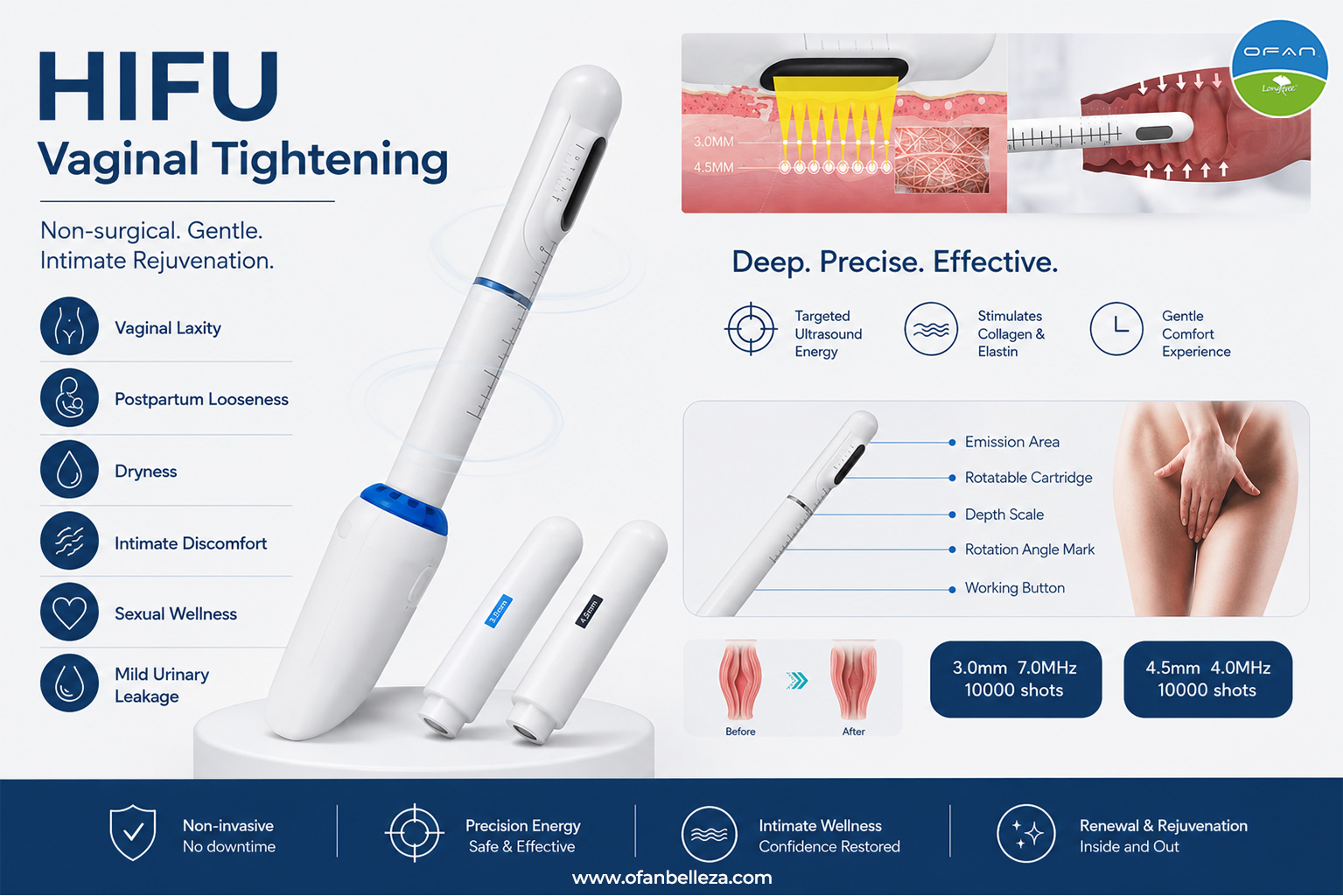
HIFU vaginal tightening, also searched as vaginal HIFU treatment, HIFU vaginal rejuvenation, or HIFU for vaginal laxity, refers to the use of focused ultrasound energy in the vaginal or vulvovaginal area. For vaginal laxity, postpartum looseness, dryness, intimate discomfort, sexual wellness, or mild urinary leakage.
Who May Consider It After Medical Evaluation?
- Women who report mild vaginal laxity after childbirth.
- Women looking for a non-surgical intimate wellness option after gynecologic assessment.
- Women with mild concerns who have already been checked for infection, abnormal bleeding, pelvic pain, prolapse, or urinary disease.
- Women who understand that evidence, device approval, and legal claims vary by country and device.
Who Should Avoid or Delay Vaginal HIFU?
- Pregnant women or people who may be pregnant.
- People with active vaginal, urinary, or pelvic infection.
- People with unexplained vaginal bleeding.
- People with undiagnosed pelvic pain.
- People with significant pelvic organ prolapse unless cleared by a specialist.
- People with recent childbirth, pelvic surgery, or vaginal procedures without medical clearance.
- People expecting guaranteed sexual improvement or guaranteed urinary incontinence treatment.
Who May Benefit From Aesthetic HIFU Treatment?
The best candidates for face and body HIFU are usually people with mild to moderate laxity who want visible but natural-looking tightening. They understand that results are gradual, not instant, and that HIFU is not a replacement for surgery when there is heavy excess skin. For vaginal tightening, suitability should be judged after gynecologic screening, not by a sales consultation alone.
| May Be a Good Candidate | May Not Be a Good Candidate |
|---|---|
| Mild to moderate skin laxity | Severe sagging or heavy excess skin |
| Early jawline blurring or mild body skin looseness | Needs surgical lifting, skin removal, or body contouring |
| Wants minimal downtime | Expects instant, dramatic transformation |
| Understands collagen remodeling takes time | Has active infection, open wounds, or unclear medical risks |
| For vaginal HIFU: has completed gynecologic screening | For vaginal HIFU: pregnant, infected, bleeding, undiagnosed pelvic pain, or significant prolapse without specialist clearance |
What Happens During an Aesthetic HIFU Treatment?
A well-run aesthetic HIFU session should feel structured and documented. It should not feel like a rushed beauty service where the only conversation is about price or package size.
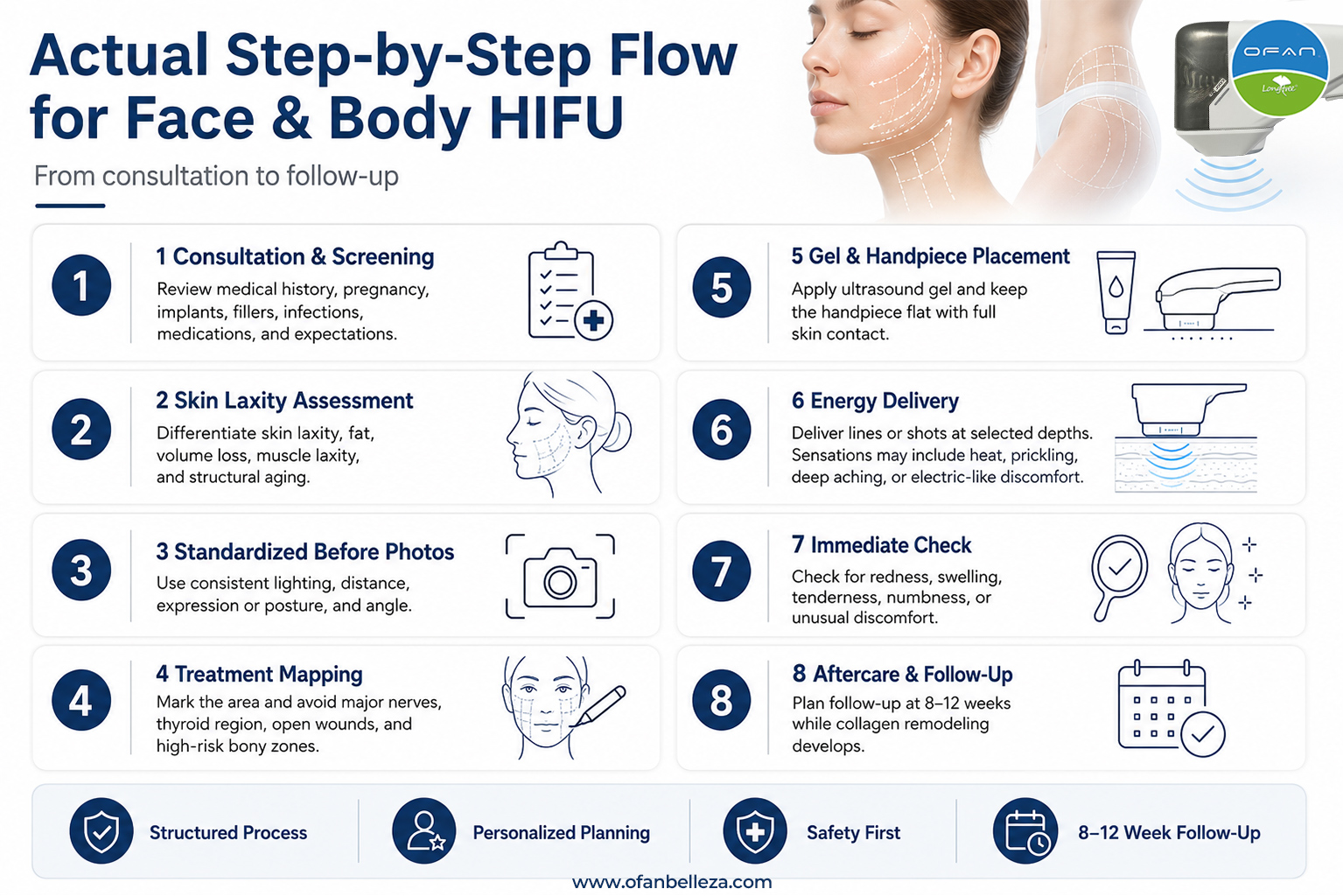
Actual Step-by-Step Flow for Face and Body HIFU
- Consultation and screening. The provider asks about medical history, pregnancy, implants, recent fillers, skin infections, previous procedures, medications, and expectations.
- Skin laxity assessment. The provider checks whether your concern is skin laxity, fat, volume loss, muscle laxity, or structural aging.
- Standardized before photos. Photos should use the same lighting, camera distance, facial expression or body posture, and angle for future comparison.
- Treatment mapping. The provider marks the treatment area and avoids unsafe zones such as major nerves, thyroid region, open wounds, and high-risk bony areas.
- Gel and handpiece placement. Ultrasound gel is applied, and the handpiece must stay flat and well-coupled to the skin.
- Energy delivery. Treatment lines or shots are delivered at selected depths. You may feel heat, prickling, deep aching, or an electric-like sensation.
- Immediate check. The provider checks redness, swelling, tenderness, numbness, or unusual discomfort.
- Aftercare and follow-up. A useful follow-up is usually planned around 8–12 weeks because collagen remodeling takes time.
Actual Step-by-Step Flow for HIFU Vaginal Tightening
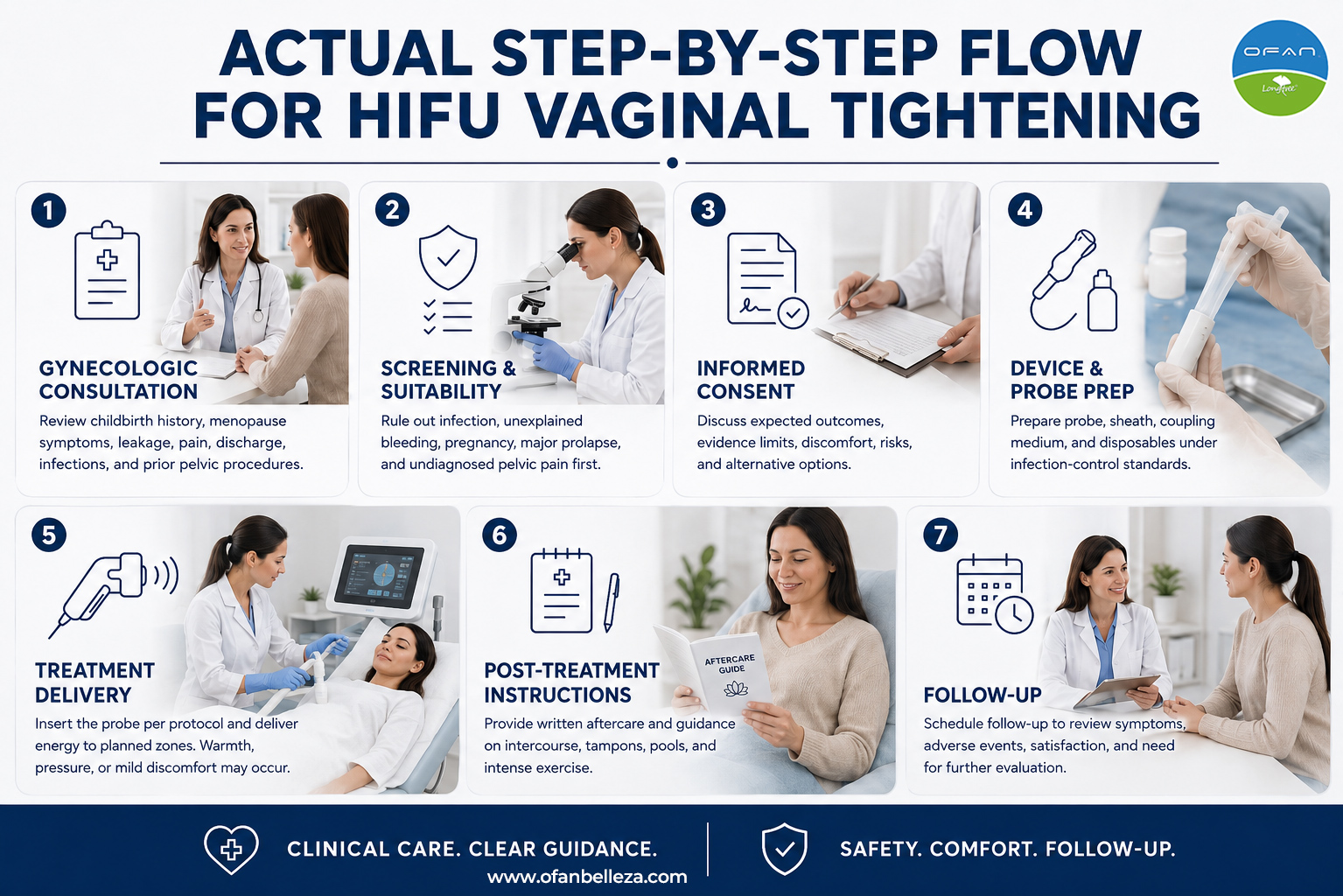
- Gynecologic consultation. The provider asks about childbirth history, menstrual status, menopause symptoms, urinary leakage, pain, discharge, infections, sexual discomfort, and previous pelvic procedures.
- Screening and suitability check. Active infection, unexplained bleeding, pregnancy, significant prolapse, and undiagnosed pelvic pain should be addressed before considering treatment.
- Informed consent. The provider explains evidence limits, expected outcomes, possible discomfort, infection risk, burns, scarring, pain during intercourse, chronic pain, and alternative options.
- Device and probe preparation. The probe, sheath, coupling medium, and disposable accessories should follow infection-control standards.
- Treatment delivery. The provider inserts the probe according to the device protocol and delivers energy in planned zones. The patient may feel warmth, pressure, or mild discomfort.
- Post-treatment instructions. The provider gives written aftercare, including what symptoms are expected, what symptoms are not normal, and when to avoid intercourse, tampons, pools, or intense exercise according to local protocol.
- Follow-up. A responsible clinic should schedule follow-up to review symptoms, adverse events, satisfaction, and whether further medical evaluation is needed.
Real Experience: What Does Aesthetic HIFU Feel Like?
In a careful session, the feeling is usually not the same across the whole treatment area. Bony facial areas such as the jawline may feel sharper. Fleshier body areas may feel warmer or deeper. Vaginal HIFU, when performed, should be described separately because it involves pressure, internal probe placement, warmth, and a different privacy and infection-control process.
What People Commonly Notice
- Short pulses of heat, prickling, or electric-like sensation during face HIFU.
- Deep warmth or tenderness during body HIFU.
- Pressure, warmth, or mild discomfort during vaginal HIFU, depending on protocol.
- Mild redness immediately after face or body treatment.
- Tenderness when pressing the treated area for a few days.
- Gradual firmness over the following weeks.
What Should Not Be Ignored
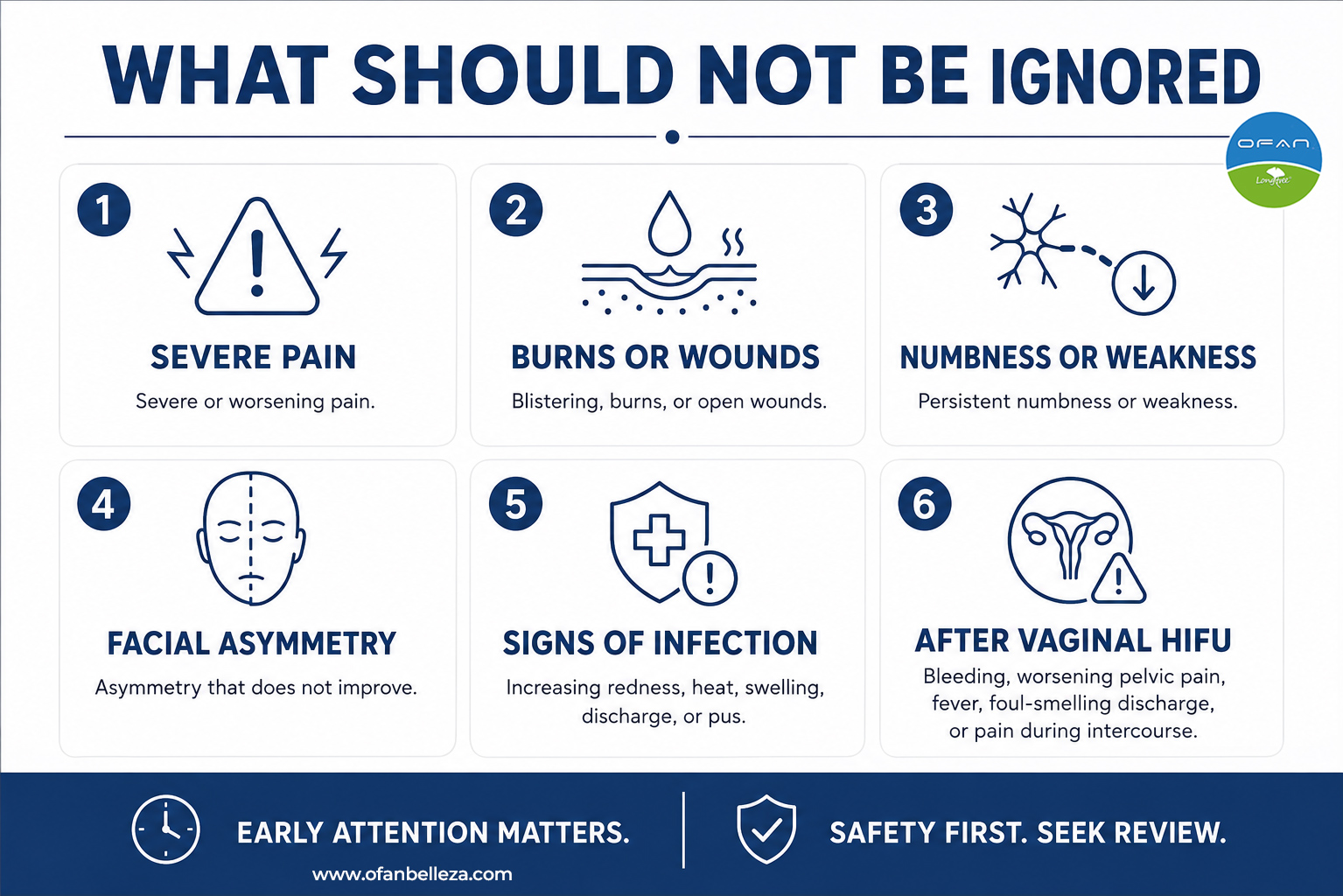
- Severe or worsening pain.
- Blistering, burns, or open wounds.
- Persistent numbness or weakness.
- Facial asymmetry that does not improve.
- Signs of infection such as increasing redness, heat, swelling, discharge, or pus.
- After vaginal HIFU: bleeding, worsening pelvic pain, fever, foul-smelling discharge, or pain during intercourse.
What Results Can You Realistically Expect?
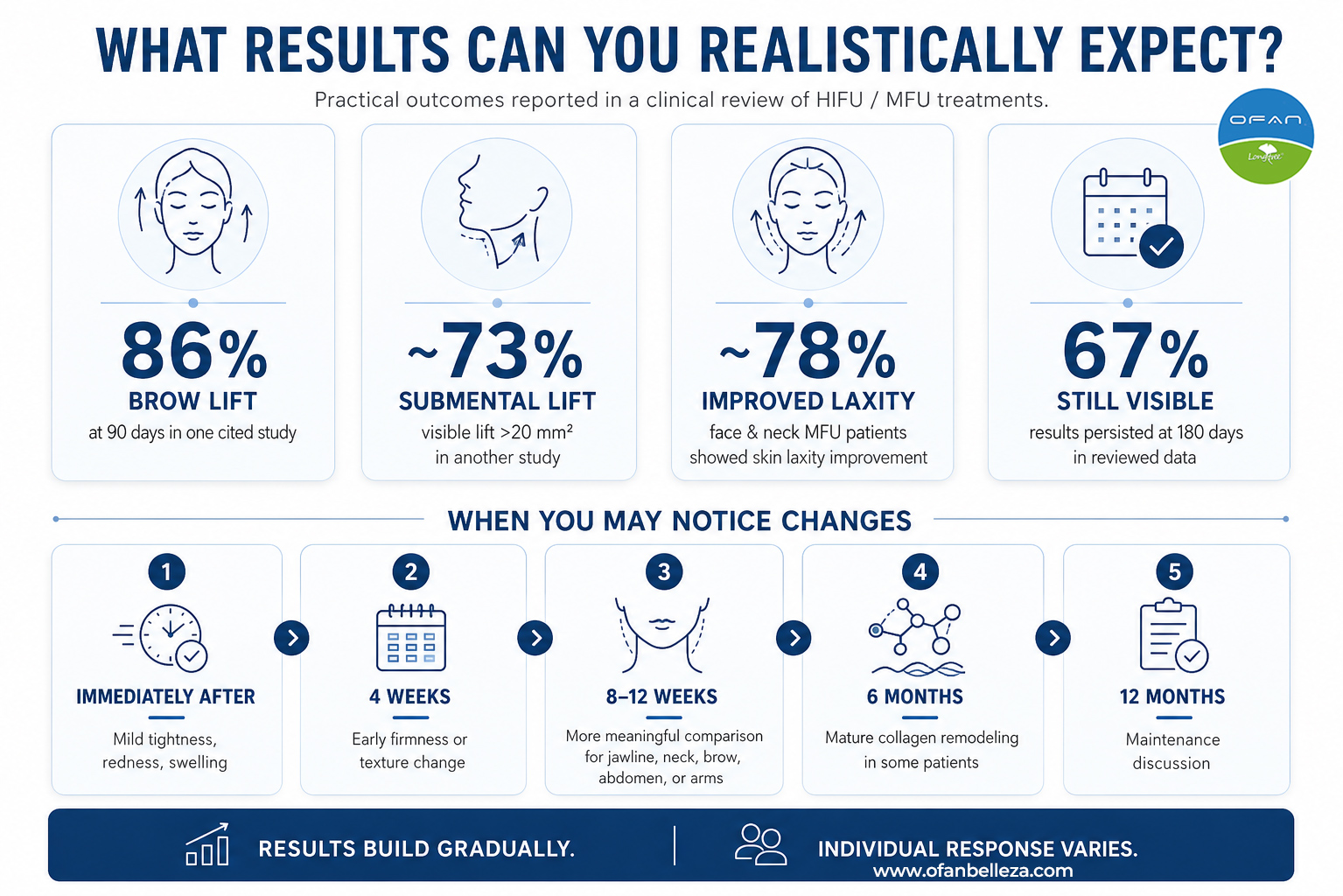
Aesthetic HIFU results are usually gradual. Some people notice mild tightness soon after treatment, but meaningful results are more often evaluated after collagen remodeling, commonly around 8–12 weeks.
A 2023 systematic review of microfocused ultrasound for facial skin tightening reported that pooled investigator scores at day 90 showed 92% of patients had some improvement in skin tightening and/or wrinkle reduction.
A clinical review in the Journal of Clinical and Aesthetic Dermatology reported several practical outcome figures, including 86% brow lift at 90 days in one cited study, nearly 73% visible submental lift greater than 20 mm² in another, and skin laxity improvement in almost 78% of patients receiving face and neck MFU treatments, with results persisting in 67% at 180 days in the reviewed data.
| Time Point | What to Look For |
|---|---|
| Immediately after | Mild tightness, redness, swelling |
| 4 weeks | Early firmness or texture change |
| 8–12 weeks | More meaningful jawline, neck, brow, abdomen, or arm comparison |
| 6 months | Mature collagen remodeling in some patients |
| 12 months | Maintenance discussion |
Aesthetic HIFU vs RF vs Laser vs Surgical Options
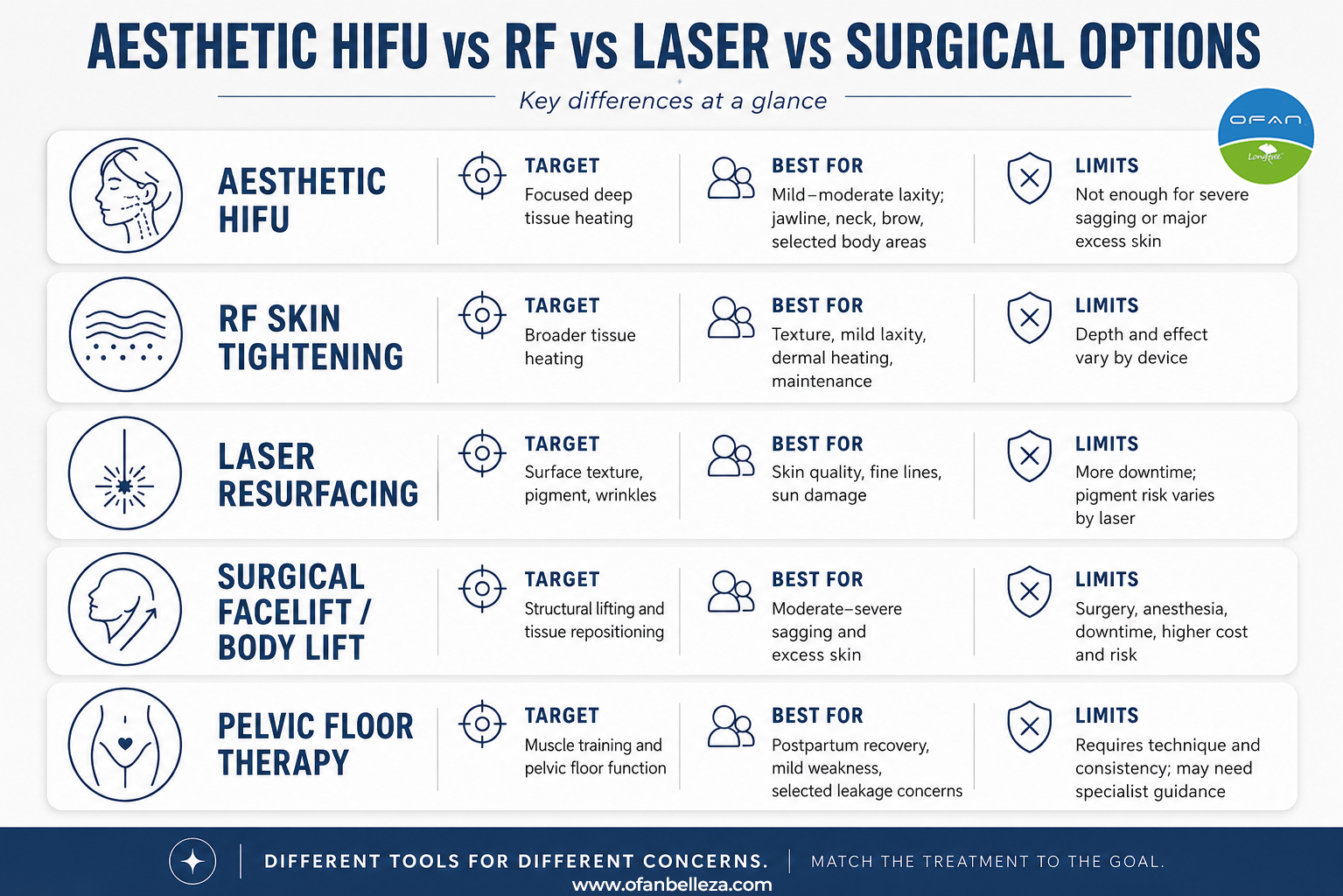
Users often search “HIFU vs RF,” “HIFU vs laser,” or “HIFU vs facelift” because they are trying to decide what actually matches their problem. The best option depends on skin thickness, laxity severity, fat distribution, age-related volume loss, downtime tolerance, budget, and risk tolerance.
| Treatment | Main Target | Best For | Limitations |
|---|---|---|---|
| Aesthetic HIFU | Focused deeper tissue heating | Mild to moderate laxity, jawline, neck, brow, selected body areas | Not enough for severe sagging or major excess skin |
| RF Skin Tightening | Broader tissue heating | Texture, mild laxity, dermal heating, maintenance | Depth and effect vary widely by device type |
| Laser Resurfacing | Surface texture, pigment, wrinkles, resurfacing | Skin quality, fine lines, sun damage | May involve more downtime and pigment risk depending on laser |
| Surgical Facelift / Body Lift | Structural lifting and tissue repositioning | Moderate to severe sagging and excess skin | Surgery, anesthesia, downtime, higher cost and risk |
| Pelvic Floor Therapy | Muscle training and pelvic floor function | Postpartum recovery, mild pelvic floor weakness, selected leakage concerns | Requires correct technique and consistency; may need specialist guidance |
HIFU Vaginal Tightening vs Laser, RF, Kegels, and Surgery
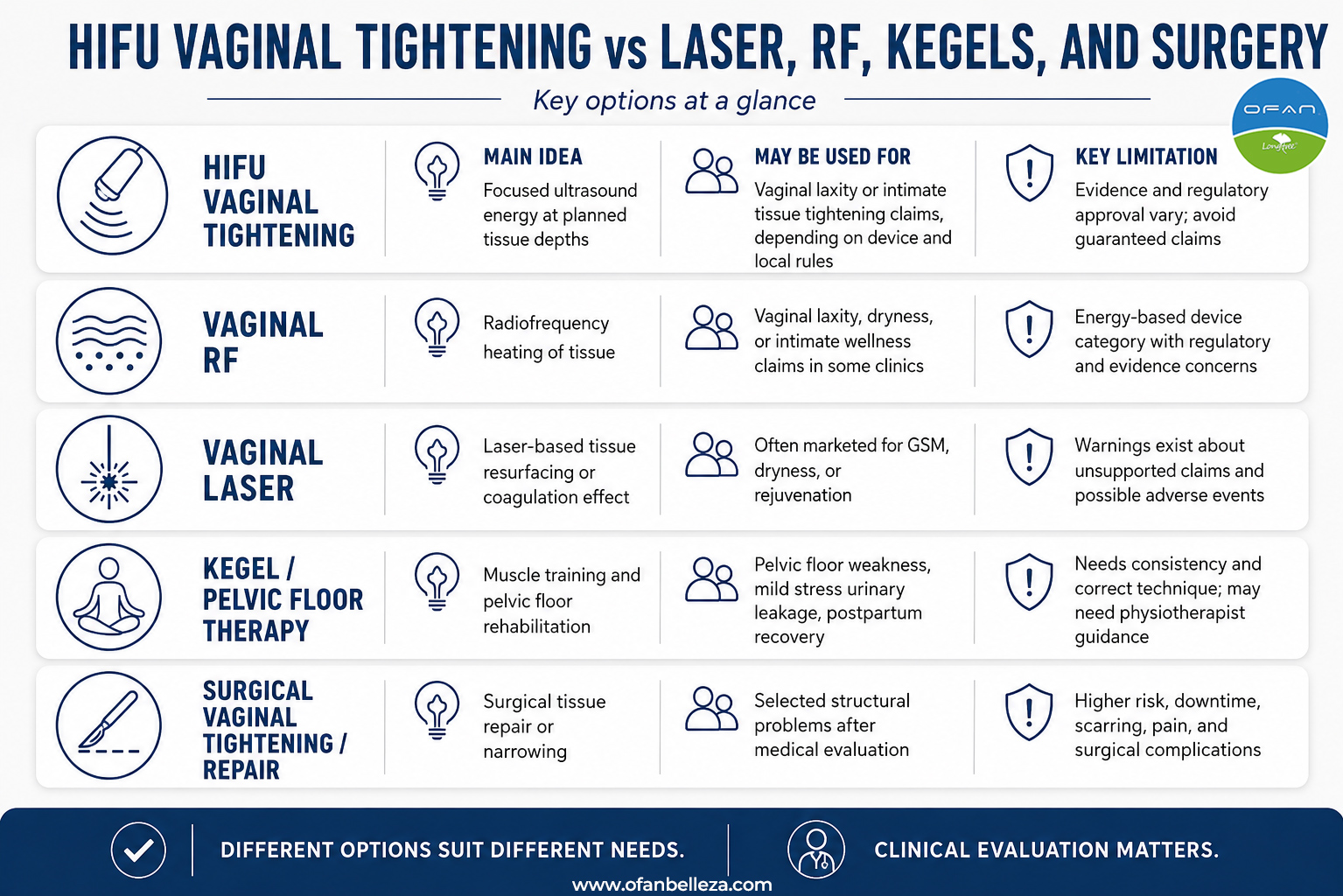
| Option | Main Idea | May Be Used For | Key Limitation |
|---|---|---|---|
| HIFU Vaginal Tightening | Focused ultrasound energy delivered to planned tissue depths | Vaginal laxity or intimate tissue tightening claims, depending on device and local rules | Evidence and regulatory approval vary; avoid guaranteed claims |
| Vaginal RF | Radiofrequency heating of tissue | Vaginal laxity, dryness, or intimate wellness claims in some clinics | Also an energy-based device category with regulatory and evidence concerns |
| Vaginal Laser | Laser-based tissue resurfacing or coagulation effect | Often marketed for GSM, dryness, or rejuvenation | FDA and professional bodies have warned about unsupported claims and possible adverse events |
| Kegel / Pelvic Floor Therapy | Muscle training and pelvic floor rehabilitation | Pelvic floor weakness, mild stress urinary leakage, postpartum recovery | Requires consistency and correct technique; may need physiotherapist guidance |
| Surgical Vaginal Tightening / Repair | Surgical tissue repair or narrowing | Selected structural problems after medical evaluation | Higher risk, downtime, scarring, pain, and surgical complications |
Professional Buyer Guide: How to Choose a HIFU Device or Clinic
This section is for both consumers and professional buyers. A good HIFU outcome depends on more than the machine name. Device identity, operator training, treatment documentation, patient selection, infection control, consent language, and follow-up all matter.
| What to Check | Good Sign | Red Flag |
|---|---|---|
| Device identity | Clinic or supplier can show brand, model, regulatory documents, and maintenance record | Only says “imported HIFU machine” without model or documents |
| Indications | Clear explanation of approved or intended areas: face, body, or intimate area | One machine is claimed to treat every problem without documentation |
| Depth options | Clear explanation of device-specific depths and treatment logic | One-depth treatment for every face, body area, and intimate concern |
| Operator training | Provider explains anatomy, safe zones, energy settings, contraindications, and aftercare | Salesperson promises “zero risk” or “permanent lift” |
| Vaginal HIFU training | Includes gynecologic screening, infection control, consent, and adverse event response | Training only teaches sales scripts and energy settings |
| Photos and records | Standardized before-and-after photos and treatment records | Heavy editing, no time labels, no written treatment record |
| Consent form | Lists pain, redness, swelling, numbness, burns, nerve effects, poor response, infection, scarring, and alternatives | Only lists benefits and discounts |
| Follow-up | 8–12 week review with standardized photos or symptom review | No follow-up unless selling another package |
For distributors How to Choose OFAN Hifu Machine
Need help choosing the right HIFU device? Contact OFAN today👉Get Quote Nowto discuss your project, product requirements, and cooperation plan.
👉Contact OFAN for OEM/ODM HIFU Device Solutions
👉Click to View: HIFU Machine
👉READ MORE
FAQs About Aesthetic HIFU Treatment
What is aesthetic HIFU treatment used for?
It is mainly used for non-surgical skin tightening and lifting in suitable candidates. Common face areas include the jawline, lower face, under the chin, neck, brow area, and décolleté. Selected body areas may include the abdomen and upper arms when supported by device indications. Vaginal HIFU claims require separate medical and regulatory caution.
Does aesthetic HIFU treatment hurt?
It can be uncomfortable. Face HIFU may feel like heat, prickling, deep aching, or electric-like pulses. Body HIFU may feel warmer and deeper. Vaginal HIFU may involve pressure, warmth, and internal-probe discomfort depending on protocol.
How long does aesthetic HIFU take to show results?
Some people notice mild tightness soon after treatment, but more meaningful changes are usually assessed around 8–12 weeks. Additional improvement may continue for several months.
How long do HIFU results last?
Longevity varies. Results may last for months to around a year or longer in some people, but aging continues. Maintenance treatment depends on age, skin quality, lifestyle, treatment area, and treatment plan.
Is aesthetic HIFU safe?
When performed on suitable candidates by trained providers using appropriate settings, aesthetic HIFU is generally considered a non-invasive treatment with limited downtime. However, side effects can occur, including redness, swelling, tenderness, bruising, numbness, burns, nerve-related effects, infection, or poor response. Vaginal HIFU requires additional gynecologic screening and infection-control standards.
Is HIFU better than RF?
Not always. HIFU is often chosen for deeper focused lifting support, while RF is often used for broader tissue heating, dermal tightening, or texture maintenance. The better option depends on anatomy, treatment area, skin thickness, and treatment goal.
Can HIFU replace a facelift or body lift?
No. HIFU may help mild to moderate laxity, but it cannot remove large amounts of excess skin or reposition tissue the way surgery can.
Is HIFU vaginal tightening the same as face HIFU?
No. The energy principle is related, but the tissue, anatomy, medical screening, infection-control requirements, provider qualification, and regulatory concerns are different.
Can HIFU vaginal tightening treat urinary incontinence?
It should not be marketed as a guaranteed urinary incontinence treatment unless the device has the proper local approval and the claim is supported by evidence. Focused ultrasound for urinary concerns is still an area where evidence and regulatory status vary.
What should not be promised in vaginal HIFU marketing?
Do not promise permanent tightening, guaranteed sexual improvement, orgasm enhancement, urinary incontinence cure, menopause symptom cure, or “zero risk.” These claims can create medical, ethical, and regulatory problems.
Final Takeaway
Aesthetic HIFU treatment is best understood as a focused ultrasound technology, not a miracle lift. For the face and body, it may help suitable candidates improve mild to moderate laxity with limited downtime. For vaginal tightening, the topic requires stronger medical screening, privacy protection, infection control, and cautious claims.
Before choosing HIFU, ask three practical questions: Is my problem really suitable for HIFU? Is the device legitimate and appropriate for this area? Is the provider trained enough to explain benefits, limits, settings, risks, and follow-up? If the answer is unclear, do not rush. Good HIFU outcomes start with correct assessment, honest expectations, safe treatment planning, and standardized follow-up.
References and Trusted Sources
- American Society for Dermatologic Surgery: Non-invasive skin tightening and ultrasound therapy information.
- American Society for Dermatologic Surgery: Ultrasound therapy for sagging skin.
- FDA 510(k) Summary: Ulthera System indications and ultrasound visualization information.
- FDA 510(k) Summary: Ulthera System expanded indication for abdomen, anterior arms, and posterior arms.
- Contini M, et al. A Systematic Review of the Efficacy of Microfocused Ultrasound for Facial Skin Tightening.
- Journal of Clinical and Aesthetic Dermatology: Customized Treatment Using Microfocused Ultrasound with Visualization.
- ACOG Committee Opinion: Elective Female Genital Cosmetic Surgery.
- Medsafe summary of US FDA Safety Communication: Energy-based devices for vaginal rejuvenation or vaginal cosmetic procedures.
- Kolczewski P, et al. Micro-Focused Ultrasound Therapy in Patients with Urogenital Atrophy and Vaginal Laxity.
- Dirican AÖ, et al. High-intensity focused ultrasound for the treatment of female urinary incontinence: retrospective analysis.


