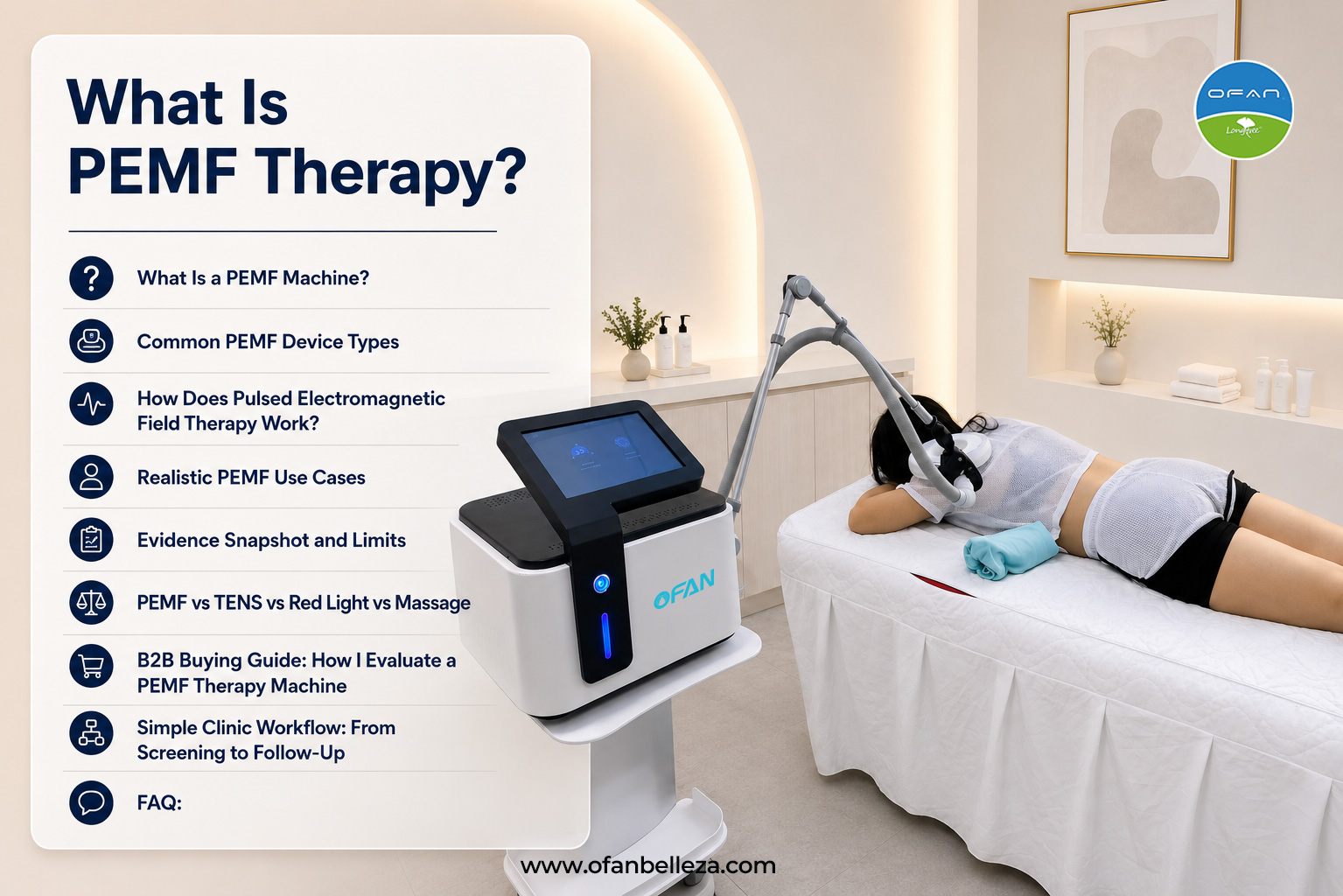
When I explain PEMF therapy to clinic owners, rehabilitation centers, distributors, and OEM/ODM buyers, I usually start with one simple sentence: PEMF therapy uses pulsed electromagnetic fields delivered through coils, mats, pads, loops, or applicators to expose a target area of the body to a controlled electromagnetic signal.
In the B2B equipment market, the question is not only “what is PEMF therapy?” Buyers also need to know what a PEMF machine looks like, how a professional PEMF therapy machine differs from a consumer wellness mat, which use cases are realistic, what claims need evidence, and what documents a supplier should provide before bulk orders.
This article gives a practical, evidence-aware explanation of PEMF therapy for professional buyers. It is written as an industry knowledge guide, a buyer checklist, and a device comparison reference—not as a miracle health claim.
PEMF therapy stands for pulsed electromagnetic field therapy. It is a non-invasive modality that applies intermittent electromagnetic field pulses to the body through a device-generated signal. In simple terms, the machine produces a pulsed electromagnetic field, and the applicator delivers that field to a selected body area.
PEMF therapy is different from static magnets. A static magnet has a constant magnetic field, while PEMF uses changing, pulsed electromagnetic fields. It is also different from TENS. TENS normally uses electrodes on the skin to create a tingling electrical stimulation sensation, while many PEMF devices may produce little or no obvious feeling during the session.
My practical definition for B2B buyers: A PEMF therapy machine is not just a “magnetic product.” It is a signal-based device category. When I evaluate one for clinics or distributors, I check the applicator design, field intensity, frequency, waveform, treatment time, safety warnings, intended use, and evidence match.
A PEMF machine is the equipment used to generate and deliver pulsed electromagnetic fields. Depending on the design, it may include a control unit, signal generator, coil, mat, loop, pad, wearable brace, cables, timer, intensity settings, and preset programs.
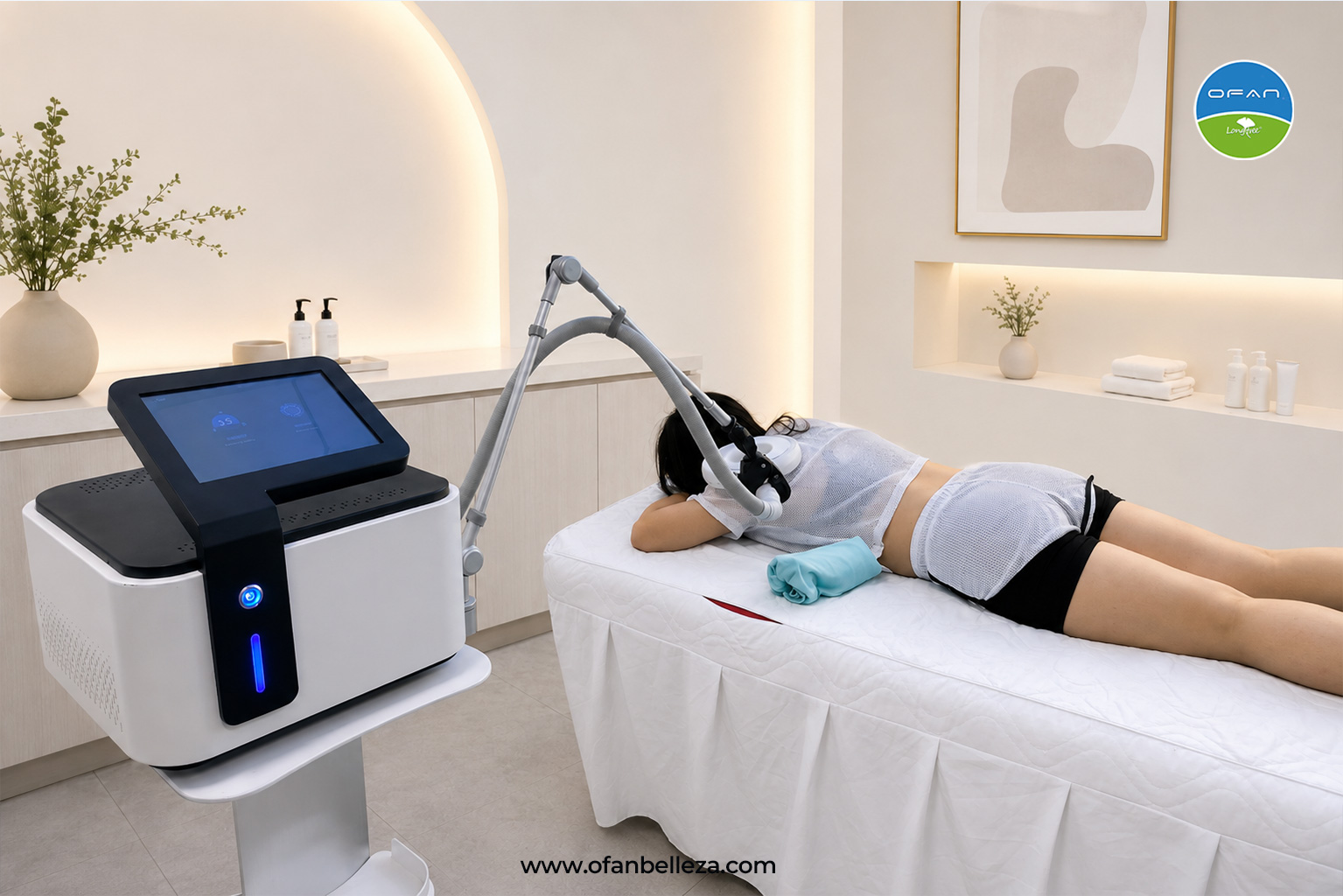
PEMF devices are not all the same. A full-body wellness mat, a professional clinic console, and a prescription bone-growth stimulator may all use pulsed electromagnetic fields, but their purpose, regulatory status, evidence level, and buyer requirements can be very different.
| Device Type | What It Looks Like | Typical Use Case | B2B Buyer Note |
|---|---|---|---|
| Full-body PEMF mat | A thicker mat with embedded coils. | Relaxation, wellness positioning, broad-area sessions. | Good for wellness channels, but avoid disease treatment claims unless supported by proper clearance. |
| Local PEMF pad or loop | A pad, paddle, loop, or coil applicator. | Knee, shoulder, back, foot, or local rehabilitation service. | Better for clinics that need targeted service protocols. |
| Wearable brace-style PEMF device | A brace or garment with built-in coils. | Specific orthopedic or bone-healing applications. | Requires careful review of intended use, documentation, and regulatory claims. |
| Professional clinic PEMF machine | Console with screen, cables, and multiple applicators. | Rehabilitation clinics, physical therapy centers, wellness clinics. | Ask for service workflow, training, maintenance, spare parts, and clinical positioning. |
| Bone-growth stimulator | Often a prescribed targeted device worn over a treatment site. | Defined bone-healing uses under medical supervision. | Do not market consumer PEMF products as bone-healing medical devices without proper authorization. |
At a basic level, pulsed electromagnetic field therapy works by generating time-varying electromagnetic fields through coils or applicators. These fields are applied near the target tissue. In clinical and laboratory discussions, PEMF is often studied for its possible influence on biological signaling, pain modulation, inflammation-related pathways, tissue repair processes, or bone-healing biology.
For professional buyers, I recommend separating PEMF use cases into three categories: better-supported medical or rehabilitation use cases, possible adjunctive wellness or recovery use cases, and high-risk claims that should be avoided unless a device has proper evidence and authorization.
| Use Case | Realistic Positioning | B2B Application | Claim Risk |
|---|---|---|---|
| Bone-growth stimulation | Specific medical device category under defined indications. | Orthopedic channel, medical device distribution, clinician-supervised use. | High. Do not claim bone healing without proper device clearance and documentation. |
| Musculoskeletal pain support | May help selected conditions, depending on diagnosis and protocol. | Rehabilitation clinics, physiotherapy centers, pain management services. | Medium. Use “may support” and avoid “cure.” |
| Osteoarthritis symptom support | Some studies show short-term improvements in pain and function, especially knee OA. | Rehab clinics, senior wellness programs, orthopedic rehabilitation services. | Medium. Avoid “cartilage regrowth” or “arthritis reversal.” |
| Sports recovery and muscle comfort | Can be positioned as recovery support if claims are conservative. | Sports recovery centers, wellness studios, spa and rehab combinations. | Medium to low if claims are not disease-treatment claims. |
| Sleep, detox, anti-aging, energy | Often marketing-heavy and needs careful wording. | Consumer wellness channels, lifestyle products. | High if disease-level or guaranteed-result claims are used. |
PEMF evidence is not the same for every condition. Some areas have more clinical discussion, while others are mainly supported by marketing claims or small studies. A B2B buyer should ask: what condition, what device, what protocol, what study design, what result, and what limitation?
| Evidence Area | What the Evidence Suggests | Practical Buyer Interpretation |
|---|---|---|
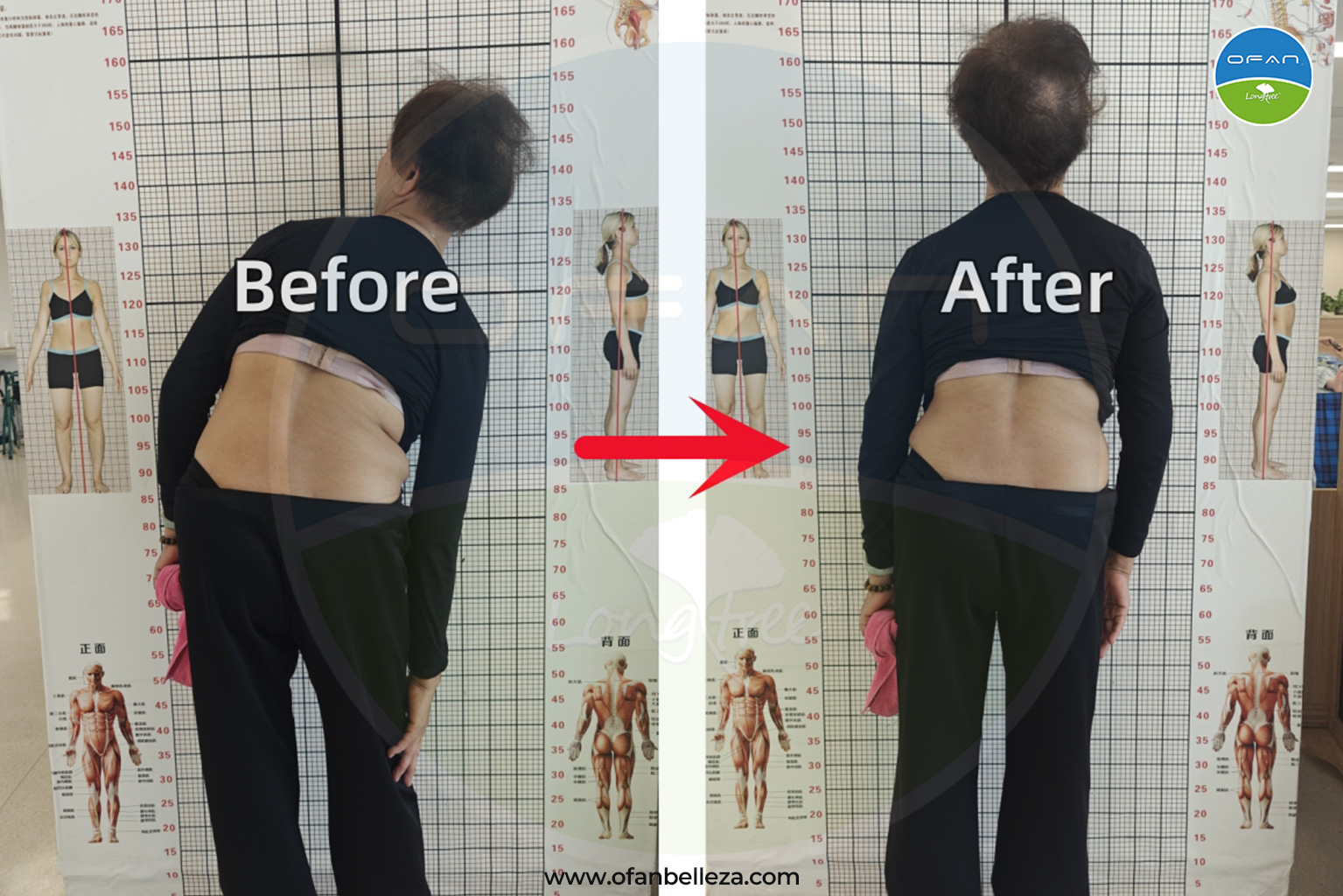
| Chronic low-back pain | NCCIH summarizes that some evidence suggests electromagnetic therapy may help improve low-back pain. | Can be discussed as a possible adjunct, not a guaranteed solution. |
| Shoulder pain | NCCIH notes that the small amount of research has not shown PEMF to be helpful for shoulder pain. | Do not build a whole product page around strong shoulder pain claims. |
| Osteoarthritis | Recent reviews and trials suggest possible improvements in pain and function, mainly in knee OA, but protocols vary. | Good topic for evidence-based education and clinic buyer content. |
| Bone-growth stimulation | FDA has a specific device classification for non-invasive bone growth stimulators under special controls and 510(k) requirements. | Do not confuse general PEMF wellness devices with regulated bone-growth stimulators. |
| General wellness claims | Claims such as detox, anti-aging, or “cell recharge” often require cautious wording. | Use conservative language and focus on comfort, relaxation, or wellness support if allowed in your market. |

Many buyers compare PEMF therapy machines with TENS units, red light devices, massage systems, shockwave devices, and heat therapy equipment. The right comparison depends on the service model. A rehabilitation clinic may care about protocols and outcomes, while a distributor may care about product positioning, training, margins, warranty, and regulatory documentation.
| Technology | Basic Mechanism | User Sensation | Best-Fit B2B Positioning | Main Limitation |
|---|---|---|---|---|
| PEMF | Pulsed electromagnetic fields through coils or applicators. | Often little or no obvious sensation. | Rehabilitation, pain support, orthopedic adjunct, wellness recovery. | Evidence and claims depend strongly on device type and parameters. |
| TENS | Electrical stimulation through skin electrodes. | Tingling, buzzing, pulsing sensation. | Pain modulation, home-use pain support, physical therapy. | Does not equal tissue healing or bone-growth stimulation. |
| Red light therapy | Specific wavelengths of light applied to tissue. | Warmth or mild skin sensation. | Skin, wellness, superficial tissue recovery, beauty and rehab crossover. | Wavelength, dose, distance, and treatment area matter. |
| Massage / vibration | Mechanical pressure or vibration. | Strong physical sensation. | Muscle comfort, relaxation, spa and wellness services. | May not address deeper orthopedic or inflammatory problems. |
| Heat therapy | Thermal effect on tissue. | Warmth. | Comfort, stiffness, relaxation services. | Not suitable for every acute or swollen condition. |
When I review a PEMF machine for a professional buyer, I do not start with the sales video. I start with the intended use, technical specifications, safety information, documentation, training process, service model, and how the machine fits the buyer’s market.
| Buyer Type | What They Usually Need | Best Content Angle |
|---|---|---|
| Distributor / importer | Stable supply, certificates, MOQ, warranty, marketing materials, training. | Wholesale, OEM/ODM, distributor support, after-sales system. |
| Clinic / rehabilitation center | Safe workflow, patient selection, protocol, contraindications, ROI. | Clinical use cases, service workflow, patient education, tracking sheet. |
| OEM/ODM brand | Customization, private label, packaging, compliance documents, batch quality. | Customization ability, factory capability, QA process. |
| Wellness chain / spa group | Comfortable experience, easy operation, staff training, service menu fit. | Non-invasive wellness support, relaxation, recovery services. |
A professional PEMF supplier should have more than attractive product photos. For B2B cooperation, I would expect a basic documentation package that helps the buyer evaluate quality, safety, compliance, and after-sales risk.
| Document | Why It Matters |
|---|---|
| User manual | Shows operation, safety warnings, and maintenance requirements. |
| Technical specification sheet | Lets buyers compare parameters instead of slogans. |
| Contraindication list | Helps clinics avoid inappropriate users. |
| Quality inspection report | Supports batch consistency and factory quality control. |
| Certificates / test reports | Needed for import, distribution, and market access. |
| Training materials | Helps distributors and clinics explain the device correctly. |
Need help choosing the right PEMF therapy device? Contact OFAN today👉Get Quote Nowto discuss your project, product requirements, and cooperation plan.

👉Contact OFAN for OEM/ODM PEMF Therapy Device Solutions
👉Click to View: PEMF Therapy Machine
👉READ MORE
For clinics, a PEMF therapy machine should not be used like a random massage tool. A basic workflow helps protect the clinic, improve service quality, and create useful internal data.
| Step | Clinic Action |
|---|---|
| 1. Intake | Ask about target area, symptoms, medical history, implants, pregnancy, surgery, and current treatment. |
| 2. Contraindication check | Review safety warnings before the session. |
| 3. Baseline record | Record pain score, stiffness, function, and comfort level. |
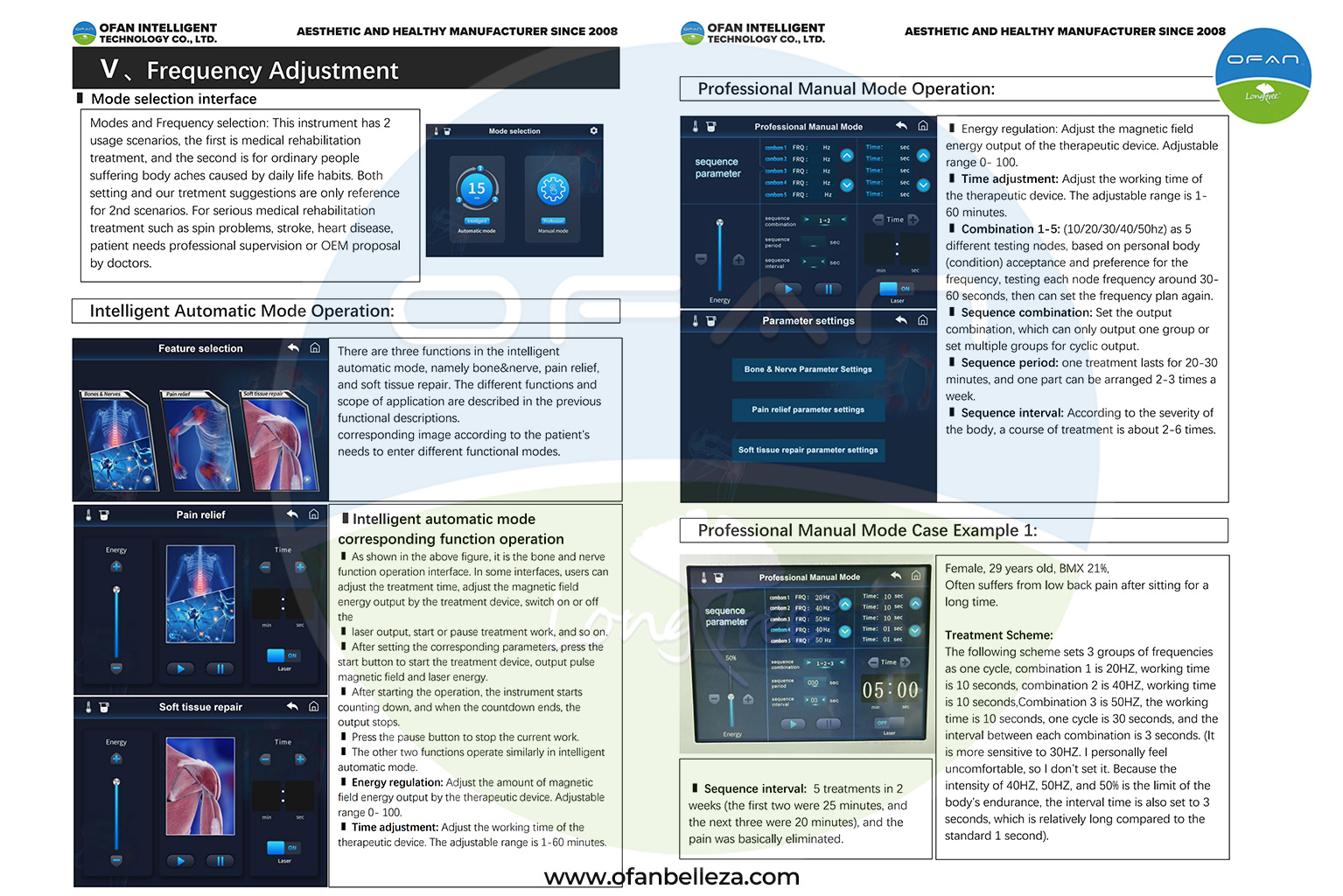
| 4. Session setup | Select applicator, body area, program, and session time. |
| 5. Comfort monitoring | Monitor discomfort, dizziness, unusual symptoms, or increased pain. |
| 6. Follow-up | Compare changes after several sessions and decide whether to continue, adjust, or refer. |
PEMF therapy, or pulsed electromagnetic field therapy, is a non-invasive approach that uses device-generated pulsed electromagnetic fields applied through coils, pads, mats, loops, or applicators. It is studied and used in different contexts, including certain rehabilitation, pain-support, osteoarthritis, and bone-growth stimulation applications.
A PEMF machine is the equipment that generates and delivers pulsed electromagnetic fields. It may include a control unit, signal generator, coil, mat, loop, pad, wearable applicator, timer, and preset programs.
PEMF machines may be used in different ways depending on device type and market authorization. Common areas include rehabilitation support, musculoskeletal comfort, osteoarthritis symptom support, wellness recovery, and specific bone-growth stimulation devices under medical supervision.
No. A PEMF therapy machine uses pulsed electromagnetic fields generated by an active device. A static magnetic mat uses a constant magnetic field. A consumer PEMF mat may also differ greatly from a professional clinic device or a regulated bone-growth stimulator.
In simple words, pulsed electromagnetic field therapy uses a machine to create controlled electromagnetic pulses and apply them near a body area. The purpose depends on the device: wellness comfort, rehabilitation support, pain-support programs, or specific medical applications.
Clinics should check intended use, contraindications, user manual, device parameters, applicator design, training materials, maintenance requirements, warranty, and whether the supplier’s evidence matches the actual device and claims.
No. PEMF should not be marketed as a universal pain solution. Evidence differs by condition and body area. For example, some evidence supports electromagnetic therapy for chronic low-back pain, while research for shoulder pain is less convincing.
No device should be described as safe for everyone. People with pacemakers, implanted electronic devices, pregnancy, serious medical conditions, active cancer near the treatment area, infection, recent surgery, or unexplained severe symptoms should ask a clinician before use.
Distributors should compare product stability, parameter transparency, documentation, certificates, OEM/ODM ability, training support, after-sales system, spare parts, packaging, lead time, MOQ, and whether marketing claims are compliant in the target market.
PEMF therapy is best understood as a non-invasive pulsed electromagnetic field technology delivered through a device. It is not simply a magnet, not the same as TENS, and not automatically a medical treatment just because it uses a scientific-sounding term.
For clinics, distributors, and OEM/ODM buyers, the most important questions are practical: What is the intended use? What device format fits the market? What parameters are provided? What claims are allowed? What evidence supports the use case? What safety warnings are included? What support does the supplier provide after purchase?
If a PEMF supplier can answer those questions clearly, provide real documents, show real specifications, explain contraindications, and avoid exaggerated medical promises, the product is much easier to evaluate professionally. If the supplier only uses vague claims such as “cell recharge,” “detox,” or “heals everything,” I would slow down and ask for evidence before placing an order.


